Running Head: Trends in U.S. COPD Triple Therapy Use, 2019-2022
Funding Support: The study was funded and supported by Boehringer Ingelheim Pharmaceuticals. Boehringer Ingelheim was given the opportunity to review the manuscript for medical and scientific accuracy, as well as intellectual property considerations.
Date of Acceptance: July 16, 2026 | Published Online Date: July 22, 2026
Abbreviations: BEC=blood eosinophil count; BGF=budesonide/glycopyrrolate/formoterol fumarate; CI=confidence interval; COPD=chronic obstructive pulmonary disease; FF/UMEC/VI=fluticasone furoate/umeclidinium/vilanterol; GOLD=Global initiative for chronic Obstructive Lung Disease; HR=hazard ratio; ICS=inhaled corticosteroid; SD=standard deviation; LABA=long-acting beta2 agonist; LAMA=long-acting muscarinic antagonist; MITT=multiple-inhaler triple therapy; ORD=Optum Research Database; RCTs=randomized controlled trials; SITT=single-inhaler triple therapy; TT=triple therapy
Citation: Bhatt SP, Clark B, DuCharme M, Veeranki P, Barnes TL. Trends in the use of triple therapy in patients with COPD in the United States, 2019 to 2022. Chronic Obstr Pulm Dis. 2026; 13(5): 362-372. doi: http://doi.org/10.15326/jcopdf.2026.0781
Online Supplemental Material: Read Online Supplemental Material (379KB)
Introduction
Chronic obstructive pulmonary disease (COPD) ranks as the third leading cause of death globally,1 responsible for 3.4 million fatalities in 2023. COPD places a substantial economic burden on both patients and the health care system.2 Exacerbations significantly contribute to this economic burden, accounting for an estimated 50%–75% of COPD-related health care costs.3 In the United States, the total direct costs of COPD are anticipated to reach $40 billion annually4,5 until 2038.
Evidence-based recommendations for the treatment of COPD have been provided by the Global initiative for chronic Obstructive Lung Disease (GOLD) report, which undergoes periodic updates to ensure alignment with the latest research and evidence-based clinical practice.6,7 The 2017 GOLD report,8 the fourth major revision, included recommendations for the pharmacological management of COPD according to individualized assessment of symptoms and exacerbation risk. Bronchodilators were recommended as initial maintenance therapy across GOLD groups, with long-acting bronchodilators preferred over short-acting, except for patients with only occasional dyspnea (GOLD Group A). Dual therapy with a long‐acting muscarinic antagonist (LAMA) plus a long‐acting beta2‐agonist (LABA) was the recommended initial treatment for symptomatic patients with a history of exacerbations (GOLD Group D). Triple therapy (TT) with LAMA/LABA/inhaled corticosteroid (ICS) was not recommended as initial therapy, but only as an escalation from dual therapy.
Although specific treatment algorithms have changed over time, GOLD has consistently recommended TT be reserved for patients with continued exacerbations while on dual therapy. The fifth major revision of GOLD, introduced in 2023, added consideration of TT as initial treatment only for GOLD Group E (≥2 moderate or ≥1 severe exacerbation leading to hospitalization in the past year) patients with elevated blood eosinophils (≥300cells/µL).9,10 Similarly, the 2020 American Thoracic Society Clinical Practice Guideline provides a conditional recommendation for the use of TT in patients with dyspnea or exercise intolerance on LAMA/LABA and one or more exacerbations in the past year.11
Prior to the availability of single-inhaler TT (SITT), multiple inhalers were required for TT regimens, often with different devices and varying frequency of use. Although effective for lowering exacerbation frequency in certain populations, the ICS component of TT use has been associated with a higher risk of pneumonia and other ICS-related adverse effects relative to long-acting bronchodilator therapy, suggesting a need to limit use to those patients with a high likelihood of benefit.12 The approval of single-inhaler fluticasone furoate/umeclidinium/vilanterol (FF/UMEC/VI) in September 2017 and budesonide/glycopyrrolate/formoterol fumarate (BGF) in July 2020 provided more convenient options for COPD patients using TT.13,14
Despite evidence-based treatment recommendations, real-world studies have found that patients with lesser disease burden are being prescribed TT.2,15,16 We hypothesized that use of TT discordant with GOLD recommendations would increase following the availability of SITT and its increasing market uptake. Therefore, we aimed to characterize annual trends in the use of TT among patients with COPD.
Methods
Data Source and Study Design
This was a noninterventional study of commercial and Medicare Advantage Part D health plan members using existing de-identified administrative claims data for the period of January 1, 2018 through December 31, 2022 (study period) from the Optum Research Database (ORD). The ORD is a fully de-identified database, which includes medical and pharmacy claims from 1993 to present with linked enrollment information for more than 73 million commercial and Medicare Advantage health plan members. Institutional review board approval or waiver of approval was not required for this study because the study data were secondary and de-identified in accordance with the United States Department of Health and Human Services Privacy Rule’s requirements for de-identification codified at 45 C.F.R. § 164.514(b). Patient consent was not required forthis retrospective study. The study was conducted in accordance with the Declaration of Helsinki.
Study Population
To be included in the study, individuals were required to have initiated multiple-inhaler TT (MITT) or SITT during the identification period (January 1, 2019 through December 31, 2022). MITT was defined as patients having ≥30 consecutive days of overlapping coverage for ICS + LAMA + LABA based on pharmacy claims, permitting up to a 7-day gap between refills for any of the 3 medications during the overlap period. The index date was defined as the first date with all 3 TT components on hand during the identification period. For SITT, the index date was defined as the date of the first pharmacy fill for FF/UMEC/VI or BGF during the identification period. Additionally, participants had to be ≥ 40 years of age in the index year, continuously insured with both medical and pharmacy coverage for 364 days prior to the index date (baseline period), and have at least one medical claim with a diagnosis code for COPD (identified using International Classification of Diseases, 10th Revision Clinical Modification diagnosis codes [Supplemental Table S1 in the online supplement]) in any position prior to the index date.
Individuals having ≥2 medical claims on separate dates of service with a diagnosis code (for the same condition) for asthma, cystic fibrosis, interstitial lung disease, or lung cancer in any position on nondiagnostic claims during the study period, ≥ 7 days of TT use during the 364 days prior to the index date, and/or missing demographic variables were excluded.
Study Variables
Demographic characteristics consisted of age as defined at index year, gender, race, ethnicity, insurance and plan type, and geographic region. The Charlson Comorbidity Index was calculated based on the presence of diagnosis codes (any position) on medical claims during the baseline period17,18 and indicates the cumulative likelihood of one-year mortality while serving as a proxy for burden of comorbidity. TT initiation type (SITT/MITT) was based on pharmacy claims.
Exacerbations were identified based on COPD-related utilization and categorized as moderate or severe. A severe exacerbation was defined by an inpatient admission or an emergency department visit with a COPD diagnosis code in the primary position or with an acute respiratory failure diagnosis in the primary position with a nonprimary COPD diagnosis; moderate exacerbation was defined by a pharmacy claim for a COPD-guideline recommended antibiotic and/or a pharmacy claim for an oral corticosteroid within ±7 days of an office visit with a COPD diagnosis in any position on a medical claim.
Symptom scales used to differentiate GOLD groups A versus B and C versus D (COPD Assessment Test and modified Medical Research Council dyspnea questionnaire) were not available in the data source. For this reason, patients were classified as GOLD A/B (no baseline exacerbation or 1 baseline moderate exacerbation not leading to hospitalization) or GOLD E (≥ 2 baseline moderate exacerbations and/or ≥ 1 leading to hospitalization) using a 12-month baseline period before index date. Although the GOLD E designation was not an official category during the study period, the terminology was used instead of GOLD C/D for contemporary relevance to identify patients with high exacerbation risk, consistent with the GOLD 2023 framework.
Baseline medication utilization variables were created for respiratory medication classes and selected individual respiratory medications based on both pharmacy and medical claims (nebulizer treatments may appear in medical claims). Patients with no evidence of an ICS, LAMA, or LABA (maintenance medication) in any combination prior to initiating TT were classified as maintenance naive. Evidence of tobacco use, lung volume reduction procedure, oxygen therapy, spirometry testing, nebulized medication delivery, provider specialty, emergency department visits, hospitalization, and blood eosinophil count (BEC) were also assessed. Eosinophil test results closest to the index date during the 6 months prior to index date (i.e., with the smallest absolute difference in days between the lab date and the index date) were captured. For multiple eosinophil laboratory results on the same date of service, the highest value was retained.
GOLD discordance was defined according to the pharmacological treatment algorithms from the relevant GOLD reports (2017–2019) at the time of the study period. TT was not recommended as initial treatment at the time; therefore, we considered maintenance-naive patients to be GOLD-discordant. We also examined the subgroup of maintenance-naive TT initiators with GOLD A/B exacerbation history for interpretation in the context of the 2023 GOLD report, which suggested consideration of TT as initial treatment in GOLD E patients with BEC ≥300 cells/µL.
Analysis
Study measures were presented for the overall population, as well as stratified by year of index date, index TT type, and for the subgroup of maintenance-naive individuals.
A multivariable logistic regression model was used to assess the association between index TT type (SITT versus MITT) and use of TT in maintenance-naive patients with a GOLD A/B exacerbation history (i.e., patients least appropriate for TT use). The model was adjusted for age group, gender, geographic region, insurance type, season, baseline Charlson Comorbidity Index, allergic rhinitis, dyspnea, pneumonia or acute bronchitis/bronchiolitis, and index provider specialty. This model was replicated in the subgroup of patients with an available BEC, additionally incorporating BEC results.
Results
Patient Characteristics
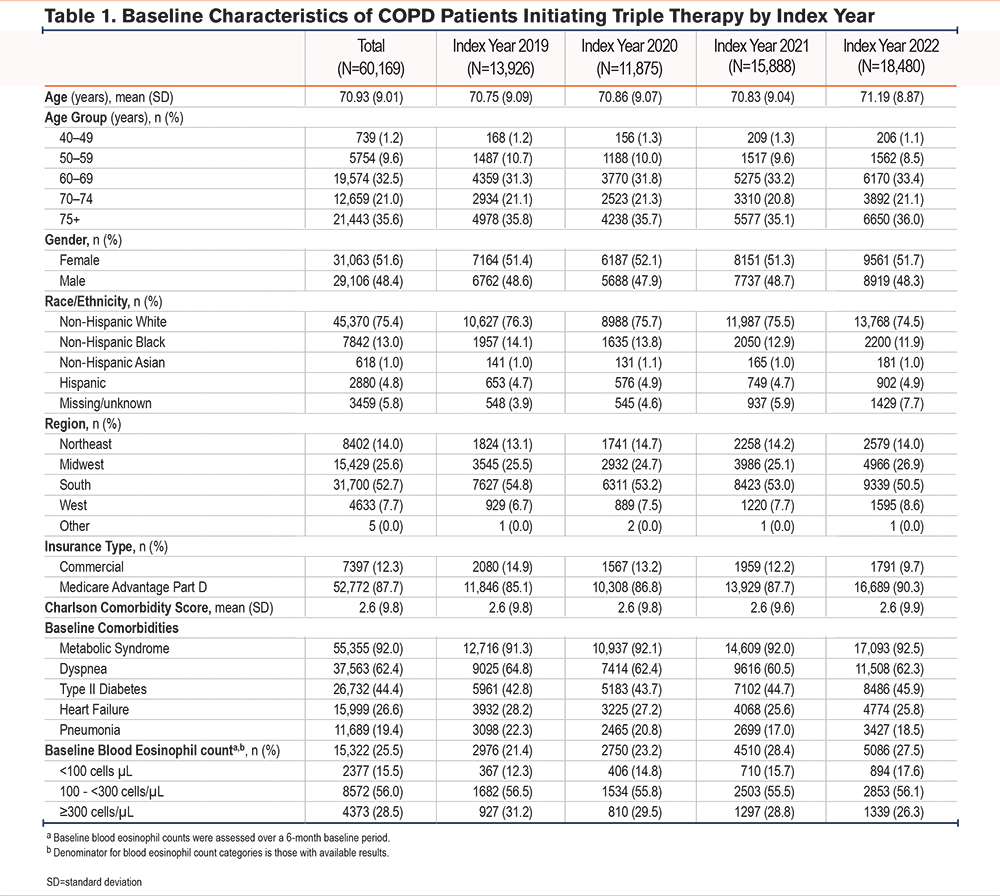
Overall, 60,169 patients with COPD initiating TT between January 1, 2019, and December 31, 2022, were included in the final study sample (see Supplemental Figure S1 in the online supplement for patient selection and subgroups). The number of TT initiators increased each calendar year, except for in 2020, when there was a 14.7% decrease from 2019. The mean (standard deviation [SD]) age of patients was 70.9 (9.0) years and 51.6% were female. Most patients (87.7%) had Medicare Advantage Part D insurance, and over half (52.7%) were from the southern region of the United States. Non-Hispanic White patients comprised 75.4% of the population, and 13.0% of patients were non-Hispanic Black (Table 1). Most patients (92.0%) had a baseline diagnosis of metabolic syndrome, and a significant proportion of patients had a diagnosis of dyspnea (62.4%), diabetes mellitus type 2 (44.4%), and pneumonia (19.4%) (Table 1).
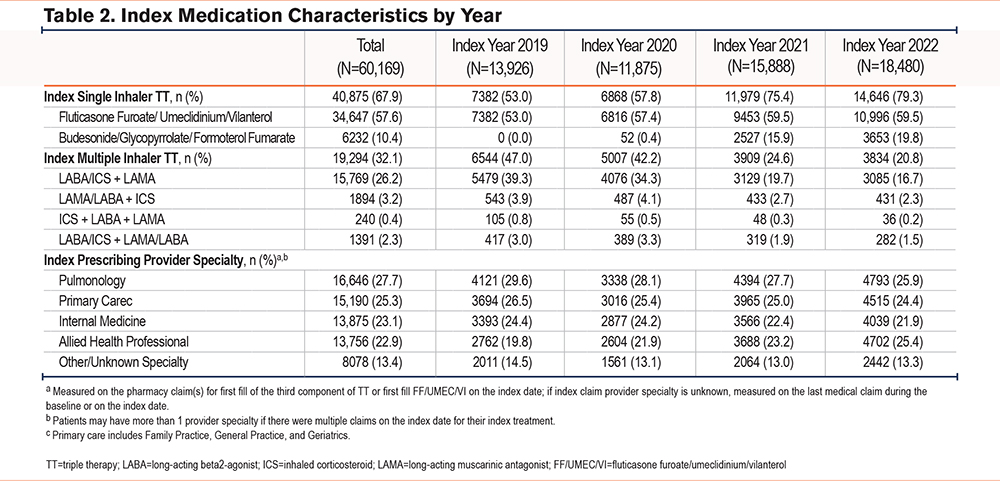
Overall, 67.9% of patients initiated SITT, with 57.6% on FF/UMEC/VI and 10.4% on BGF (Table 2). The remaining 32.1% of patients used MITT, primarily LABA/ICS + LAMA. Over time, the proportion of patients initiating SITT increased each year from 53.0% in 2019 to 79.3% in 2022. The specialty prescribing TT was most frequently pulmonology (28%) followed by primary care (25.3%), internal medicine (23.1%), and allied health professionals (22.9%) (Table 2).
Baseline Respiratory Medication Use
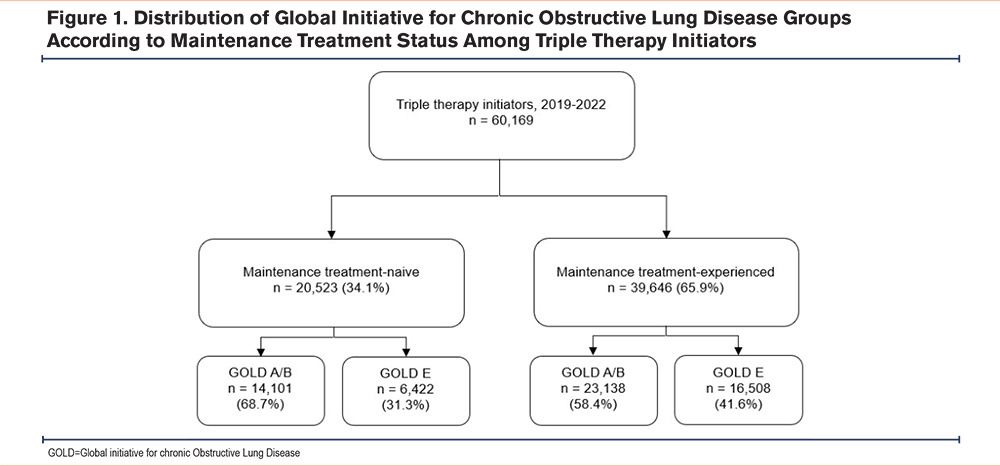
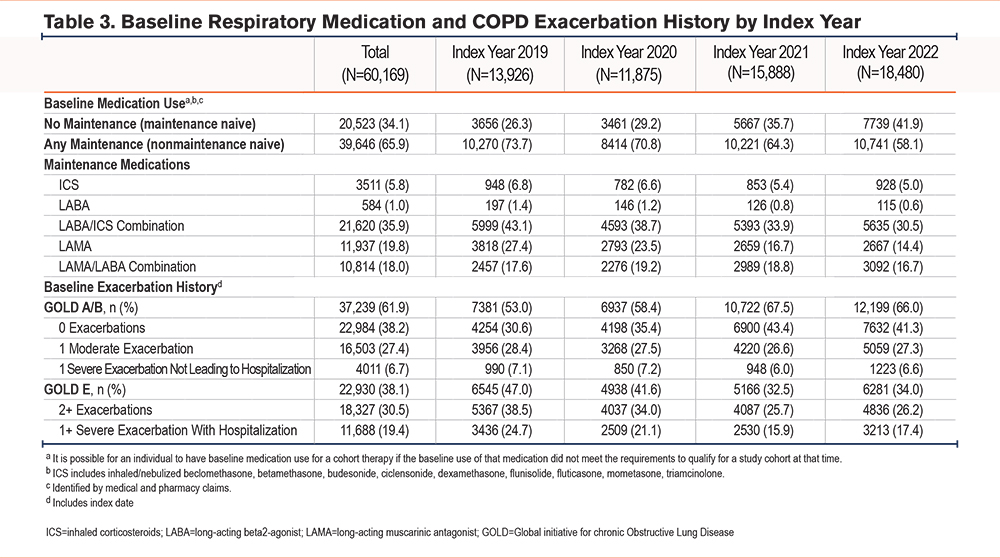
Over 1/3 of patients (34.1%) did not use any maintenance inhalers in the 12 months prior to starting TT, i.e., were maintenance naive (this increased from 26.3% in 2019 to 41.9% in 2022), while 65.9% had prior maintenance treatment (nonmaintenance naive) (Figure 1). LABA/ICS was the most common maintenance therapy used during the baseline period (35.9%); this decreased from 43.1% in 2019 to 30.5% in 2022. Baseline use of LAMA was 19.8%; this decreased from 27.4% in 2019 to 14.4% in 2022, and baseline use of LAMA/LABA was 18.0%; rates remained relatively stable ranging from 17.6% in 2019 to 16.7% in 2022 (Table 3).
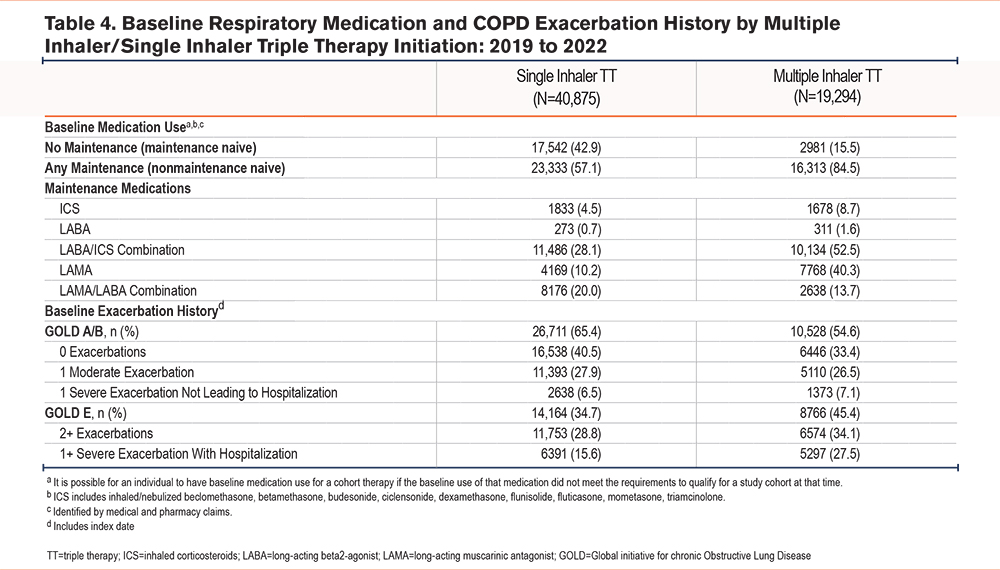
Stratified by index TT type, the proportion of SITT initiators that were maintenance naive was greater than that of MITT (42.9% versus 15.5%). Baseline use of LABA/ICS and LAMA was less common among SITT users, while a greater proportion of SITT users had baseline LAMA/LABA use (Table 4).
Baseline Exacerbation History
Among patients initiating TT, 61.9% had a baseline exacerbation history consistent with GOLD group A/B, with an increase from 53.0% in 2019 to 66.0% in 2022. Additionally, 38.2% of patients initiating TT experienced zero exacerbations in the past 12 months, rising from 30.6% in 2019 to 41.3% in 2022. Further, 19.4% were hospitalized for an exacerbation (Table 3).
When stratified by index TT type, a greater proportion of SITT initiators had GOLD A/B exacerbation history compared to MITT initiators (65.4% versus 54.6%). Additionally, a lesser proportion of SITT initiators (15.6% versus 27.5%) had at least one baseline exacerbation leading to hospitalization (Table 4).
Blood Eosinophil Results
Baseline BEC results were available for 25.5% of the overall study population. Of those with valid results, 28.5% had BEC ≥300cells/µL. This decreased over time from 31.2% in 2019 to 26.3% in 2022. Approximately 16% of patients had BEC<100cells/µL. This increased over time from 12.3% in 2019 to 17.6% in 2022 (Table 1).
Maintenance-Naive Subgroup
From the overall study population, 20,523 patients comprised the maintenance-naive subgroup. Mean (SD) age was 70.6 (9.1) years and 51.4% were males. Additional demographic characteristics can be found in Supplemental Table S2 in the online supplement.
A substantial proportion (85.5%) of the maintenance-naive subgroup population used SITT of whom 83.6% were on FF/UMEC/VI and 16.4% were on BGF. The remaining 14.5% used MITT, primarily LABA/ICS + LAMA. Index prescribing specialty was most frequently primary care providers (25.7%), internal medicine (25.2%), and pulmonology (24.7%) (Supplemental Table S2 in the online supplement).
The majority (68.7%) of the maintenance-naive subgroup had a GOLD A/B exacerbation history, while 31.3% had a GOLD E exacerbation history (Figure 1). When stratified by index TT type, 71.5% of SITT users had a GOLD A/B exacerbation history, compared with 52.4% of MITT users (Supplemental Table S2 in the online supplement).
BEC results were available for 27.9% of the maintenance-naive subgroup. The distribution of BEC results was similar to that of the overall population of TT initiators, with 27.6% having BEC ≥300cells/µL, 57.2% with BEC ≥100 – <300cells/µL, and 15.2% with BEC <100cells/µL (Supplemental Table S2 in the online supplement).
Multivariable Analyses
Among the overall population of TT initiators, SITT was associated with 5.04 times (95% confidence interval [CI]: 4.76–5.33; p<0.001) greater odds of being maintenance naive with a GOLD A/B exacerbation history at treatment initiation, as compared with those receiving MITT in adjusted multivariable logistic regression models (Supplemental Table S3 in the online supplement).
Among the subgroup of patients with a baseline BEC result, SITT was associated with 4.64 (95% CI: 4.14–5.20; p<0.001) times greater odds of use in maintenance-naive patients with a GOLD A/B exacerbation history, compared with MITT (Supplemental Table S4 in the online supplement).
Discussion
In this real-world study of patients with COPD initiating TT, we observed an increasing use of SITT and GOLD-discordant treatment. From 2019 to 2022, the prescription of SITT shifted from about 50% to almost 80% of TT initiation. Most patients initiating TT had a GOLD A/B exacerbation history and approximately one-third did not have evidence of maintenance therapy in the 12 months before TT initiation. At the time of the study period, GOLD did not recommend TT as an initial maintenance treatment. Additionally, 1 in 5 patients starting TT was maintenance naive with a GOLD A/B exacerbation history. Notably, this practice of broader use of TT increased over the duration of the study and coincided with increasing use of SITT.
A greater proportion of SITT initiators had a GOLD A/B exacerbation history and were maintenance naive compared to MITT. This was most notable for maintenance-naive status, with 42.9% of SITT used as first-line maintenance therapy compared to 15.5% of MITT. Further, SITT initiators were significantly more likely to meet both criteria, even after adjustment for demographic and clinical factors that could impact prescribing decisions. Although there are demonstrable benefits associated with SITT over MITT, our findings also indicate that as the uptake of SITT has increased over time, it is being used more frequently in patients that have a low exacerbation history and lack of prior maintenance therapy use. Previous studies have found 50%–80% of COPD patients on TT were found to have guideline-discordant prescribing.19,20 We cannot, however, ascribe casualty to the association between increasing availability of SITT and the increase in guideline-discordant care. Other factors such as industry promotion, formulary coverage, physician familiarity, and post-COVID prescribing shifts may also explain the observed trend and warrant consideration in future analyses.
The Informing the Pathway of COPD Treatment (IMPACT) and Efficacy and Safety of Triple Therapy in Obstructive Lung Disease (ETHOS) randomized controlled trials (RCTs) demonstrated superior efficacy of single-inhaler FF/UMEC/VI and BGF, respectively, compared to dual therapies in patients with COPD and high exacerbation risk. The inclusion criteria for these trials required at least one exacerbation in the prior year and use of maintenance therapy at screening. One study estimated that less than 10% of real-world patients with COPD would be eligible for either trial.21 Our study suggests that TT is being used beyond the population studied in these trials. Other real-world studies have provided evidence that the efficacy seen in RCTs is not generalizable to the less severe COPD population treated with TT in routine clinical practice. Suissa et al found that among ICS-naive patients, SITT was not more effective than dual bronchodilators at reducing the incidence of exacerbation, except among patients with multiple exacerbations in the past year.22
The GOLD strategy limits initial TT treatment to patients with BEC ≥300cells/μL; however, posthoc analyses of the IMPACT and ETHOS trials suggest benefits may extend to patients with counts ≥100cells/μL, with greater benefit observed at higher BEC levels.23-25 We found that most patients (>70%) receiving TT did not have high eosinophil levels (≥300cells/µL). Further, about 15% of our subgroup with eosinophil results had BEC <100cells/µL, a population which is least likely to benefit from TT and may have increased risk of pneumonia. A real-world study comparing SITT with LAMA/LABA found no significant difference in the incidence of moderate or severe COPD exacerbations in patients with BEC ≤300cells/µL, even among a subset of GOLD E patients.26 The varying response to ICS reinforces the importance of consideration of BEC when prescribing TT. Systematic reviews indicate that ICS withdrawal from TT to dual bronchodilators generally does not increase exacerbation risk overall (hazard ratio [HR] ~0.96; 95% CI 0.80–1.15), though patients with BEC ≥300cells/μL may experience higher risk27 (HR 1.35; 95% CI 1.00–1.82). In conjunction, persistence and adherence studies strongly favor SITT over multiple-inhaler regimens, with higher odds of adherence and persistence compared to MITT, and U.S. cohorts reporting28 12-month persistence rates of 35.7% versus 13.9%.
Suboptimal compliance with GOLD treatment recommendations remains problematic, with noncompliance primarily due to overuse of ICS-containing therapies.29 Use of TT in populations contrary to recommendations may expose patients to unnecessary ICS-associated risks, such as increased pneumonia events among those with lower BEC.30 ICS exposure has been shown to increase risk of certain costs and adverse events, including cataracts, pulmonary tuberculosis, diabetes onset and progression, and risk of fractures.31-34 Low-value ICSs have also been associated with increased outpatient health care visits and higher associated costs.35 Compliance with GOLD recommendations has been associated with significant reductions in COPD-related medical costs, particularly, COPD-related inpatient utilization and their costs.29 It has also been seen in real-world studies that TT was not more effective compared to dual bronchodilators.22,36 Although single-inhaler regimens offer convenience for both patients and providers, our findings indicate that the widespread availability of SITT may be contributing to guideline-discordant prescribing. Importantly, single-inhaler formulations of long-acting mono- and dual-bronchodilator therapies are also available, supporting the use of a stepwise treatment approach as recommended by GOLD to minimize inappropriate escalation to TT. Recent evidence on ICS de-escalation strategies and SITT persistence/adherence patterns should be considered to provide a more balanced interpretation of clinical practice trends and inform future guideline implementation efforts. At a health system level, provider education and clinical decision support tools to assist with guideline-recommended prescribing could be implemented. SITT should be initiated mainly in patients with multiple exacerbations while, for most others, dual bronchodilators are just as effective while avoiding the excess risk of severe pneumonias.22
As patients with severe COPD are associated with the highest clinical and economic burden, benefits in this population are noteworthy.37 Despite additional updates to COPD management guidelines over the years, efforts to inform prescribers about when to appropriately use TT or consider alternatives have not kept pace, potentially contributing to continued guideline-discordant prescribing.2 Current recommendations provide ICS withdrawal by de-escalation as an optimized pharmacological therapy for stable COPD patients.10 De-escalation of ICS can possibly reduce the risk of pneumonia and exacerbations as well as dyspnea.
The 2026 GOLD report introduced a revision to the criteria defining GOLD groups, requiring only one moderate or severe exacerbation in the prior year for GOLD group E.38 Nearly half of the maintenance-naive TT initiators had zero exacerbations in the past year, suggesting substantial GOLD discordance, even when applying this updated criterion. Future research should continue to monitor trends in the use of TT.
The limitations of this study merit careful consideration, particularly in guiding future research directions. First, the presence of a claim for a filled prescription does not indicate that the medication was taken as prescribed. Medications filled over-the-counter or provided as samples by the physician or in a clinical trial will not be observed in the claims data. Second, the presence of a diagnosis code on a medical claim may be incorrectly coded or included as exclusion criteria rather than actual disease. Although all individuals were included on the basis of initiation of TT and with a prior COPD diagnosis claim, and patients with other lung diseases were excluded to improve specificity, misclassification remains possible. We also note that with the limitations of claims-based analyses, not all initiation of SITT is necessarily inappropriate.
Lastly, COPD exacerbations were defined using claims only and possibly lead to misclassification. The algorithm employed in this study is, however, consistent with those utilized in other real-world evidence studies of COPD.21,22
In conclusion, this study provides real-world evidence that helps characterize COPD patients initiating TT and describes the annual trends in the use of TT. Overall, these data showed increasing use of SITT and GOLD-discordant prescribing. The evidence provided can potentially highlight the importance of provider education on treatment recommendations, appropriate use of ICS, treatment protocols, and prevention of inappropriate prescribing practices and associated adverse outcomes.
Acknowledgements
Author contributions: SPB, BC, PV, and TLB conceived and designed the study. TLB and MD conducted the data analysis. All authors reviewed, edited, and approved the manuscript submitted for publication.
Declaration of Interest
The authors did not receive payment for authorship. Medical writing support was provided by Daryl Truong, PharmD, of Optum, and was contracted and funded by Boehringer Ingelheim. SPB has received fees for consulting or advisory boards from Aerogen, Apreo, AstraZeneca, Boehringer Ingelheim, Chiesi, Connect Biopharma, Genentech, GSK, Kymera, Merck, Polarean, Prana Therapies, Sanofi, Regeneron, Uniquity, Verona Pharma, and Zymeworks. His institution has received funds for research from Apreo, Connect Biopharma, the COPD Foundation, Genentech, Nuvaira, Sanofi, and Uniquity. He has received honoraria for CME from Horizon CME, Illuminate Health, Integritas Communications, IntegrityCE, and MedScape. He serves on the Science Committee of GOLD. BC is an employee of Boehringer Ingelheim Pharmaceuticals, Inc. MD and PV are employees of Optum Life Sciences. MD is a shareholder of UnitedHealth Group. TLB was an employee of Optum Life Sciences at the time of the study.